His Skin Was Suffering. His Nervous System Was the Missing Piece.
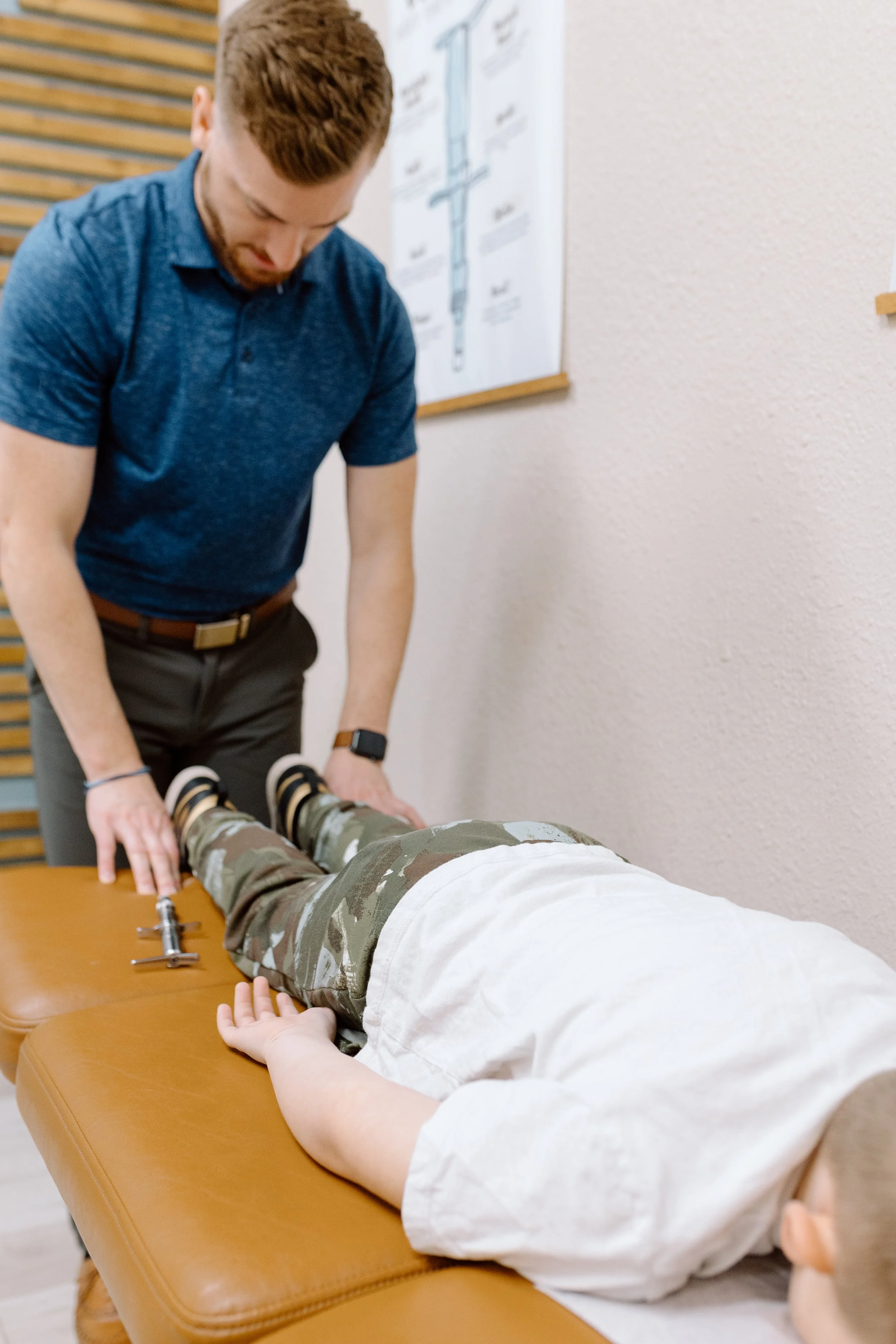
How a 10-year-old boy's eczema dramatically improved through neurologically-based chiropractic care — and what his family discovered along the way.
Miles was 10 years old and covered in eczema.
Not the occasional dry patch kind. The kind that kept him up at night, the kind that made him self-conscious, the kind his family had been trying to manage for years with creams, dietary changes, and doctor visits — with limited results.
His mom had heard about Edified Chiropractic and decided to bring the whole family in that May. Miles and his family all started getting adjusted together.
What happened over the following months surprised everyone — including them.
Whatever it is, the way you tell your story online can make all the difference.
How Would a Chiropractor Help With Eczema?
It's a fair question. Most people think of chiropractic care as something you do for back pain or neck stiffness. But at Edified, we approach care from a completely different lens — the nervous system.
Your nervous system controls everything. It regulates your immune response, your inflammatory processes, your body's ability to adapt to stress, and yes — your skin.
Eczema, at its core, is often an immune and inflammatory condition. The skin is reacting to something — internal stress, external triggers, or a nervous system that's stuck in overdrive. When the body is perpetually in a fight-or-flight state, the immune system becomes dysregulated. Inflammation increases. The skin barrier weakens. Flares happen.
Neurologically-based chiropractic care focuses on removing interference from the nervous system — specifically the kind that keeps the body stuck in that sympathetic, high-stress state. When the nervous system can regulate properly, the body has a far better chance of healing itself.
We didn't set out to treat Miles' eczema. We set out to help his nervous system function better. The skin improvements were the result of that.
"We didn't set out to treat Miles' eczema. We set out to help his nervous system function better."
What We Found When We Scanned Miles
Before we ever adjust a new patient, we perform a neurological assessment using three specialized scans:
• HRV (Heart Rate Variability): measures how well your nervous system adapts to stress
• sEMG (Surface Electromyography): detects muscle tension patterns along the spine caused by nerve interference
• Thermal Imaging: identifies temperature asymmetries that reveal how the autonomic nervous system is functioning
Miles' scans showed a nervous system under significant stress. His body was working hard just to keep up — and that level of chronic activation was affecting far more than just his spine.
For kids especially, we pay close attention to HRV. A low or dysregulated HRV in a child often tells us their nervous system isn't getting adequate recovery time. It's constantly "on." And a nervous system that never rests struggles to regulate the immune system, digestion, sleep — all the foundational things kids need to thrive.
The Whole Family Started Getting Adjusted
One of our favorite things at Edified is when families come in together. Miles didn't walk through our doors alone — his family came too.
There's something powerful about that. When a whole family commits to nervous system health together, they reinforce each other. Kids see their parents getting adjusted and it normalizes care. Parents notice changes in their kids and in themselves. The household energy shifts.
Miles started his care plan in May. Consistent adjustments. Consistent monitoring. Consistent progress.
What Changed for Miles
Over the months that followed, Miles' skin started to change.
The eczema — the persistent, chronic, hard-to-manage eczema — saw dramatic improvement. Not a total disappearance overnight, but a real, meaningful shift that his family noticed and that became more and more apparent as his nervous system continued to regulate.
This is how healing through the nervous system often works. It's not a switch that flips — it's a gradual unwinding. As the body spends less time in fight-or-flight and more time in a parasympathetic, rest-and-repair state, systems that were struggling start to work better.
The immune system calms. Inflammation decreases. The skin barrier strengthens.
For Miles, that process showed up on his skin.
"As the body spends less time in fight-or-flight and more time in a rest-and-repair state, systems that were struggling start to work better."
The Connection Between Stress, the Immune System, and Skin
Eczema affects roughly 10–20% of children worldwide, and its causes are often described as complex and multifactorial. Genetics, environment, allergens — these all play a role. But one factor that's frequently under-addressed is the nervous system's influence on immune regulation.
The autonomic nervous system — the part that controls your fight-or-flight and rest-and-digest responses — has direct influence over immune function. When a child is under chronic stress (even the kind they can't articulate or identify), their immune system often becomes hyperreactive. It starts responding to things it shouldn't, or responding too intensely.
At Edified, we call these stressors the three T's: Traumas, Toxins, and Thoughts. They don't have to be dramatic to accumulate. A difficult birth, environmental exposures, emotional stress, the demands of school — over time, these stack up in the nervous system.
When we help a child's nervous system process and release that accumulated load, the body can start to regulate itself more effectively — including the immune responses that drive conditions like eczema.
Is Chiropractic Care Right for My Child's Skin Issues?
We want to be clear: we don't treat eczema. We don't diagnose skin conditions, and chiropractic care is not a replacement for the medical treatment your child may be receiving.
What we do is assess the nervous system and remove interference that may be preventing the body from healing and regulating on its own. Sometimes, when that interference is reduced, the body does remarkable things.
Miles is one example. We've also seen nervous system support contribute to improvements in sleep, digestion, behavior, focus, and immune resilience in children. The nervous system doesn't compartmentalize — when it heals, it heals broadly.
If your child is struggling with a chronic condition that hasn't fully responded to conventional approaches, it may be worth asking: what is the nervous system's role in this?
What a New Patient Visit Looks Like at Edified
If you're curious about what care looks like for your child, here's what to expect:
• A neurological assessment using our HRV, sEMG, and thermal scans — no X-rays, no radiation, completely non-invasive
• A detailed consultation about your child's health history, current symptoms, and goals
• A clear explanation of what the scans show and whether we believe we can help
• A care plan recommendation specific to your child's nervous system findings
We see families from across the East Valley — Gilbert, Chandler, Mesa, Queen Creek, Tempe, and beyond. And yes, we love when whole families come in together.
The Nervous System Is the Foundation
Miles came to us because his mom was looking for answers. She wasn't sure if chiropractic would help — but she was willing to find out.
Now she and her children are adjusted together regularly. Miles' skin has seen dramatic improvement. And the whole family is experiencing what it feels like to have a nervous system that's working with them instead of against them.
That's what we're here for.
DISCLAIMER
Edified Chiropractic does not diagnose, treat, or claim to cure eczema or any other skin condition. The experience shared in this post reflects one family's individual results with neurologically-based chiropractic care. Results vary and are not guaranteed. Chiropractic care is not a substitute for medical treatment. If your child has a skin condition, please consult with a qualified medical provider.