One Less Diagnosis. One More Reason to Believe Your Body Can Heal.
Christiana just hit a major milestone. Here’s everything her nervous system quietly fixed along the way.
When Christiana filled out her intake paperwork, she didn't mention nightmares.
Why would she? She came in for migraines. The nightmares were just... part of life. Something she managed. Something she'd stopped expecting to change.
But nervous systems don't heal in neat, compartmentalized ways. When the interference clears and the body finally gets to rest — really rest — things you weren't even asking about start to shift.
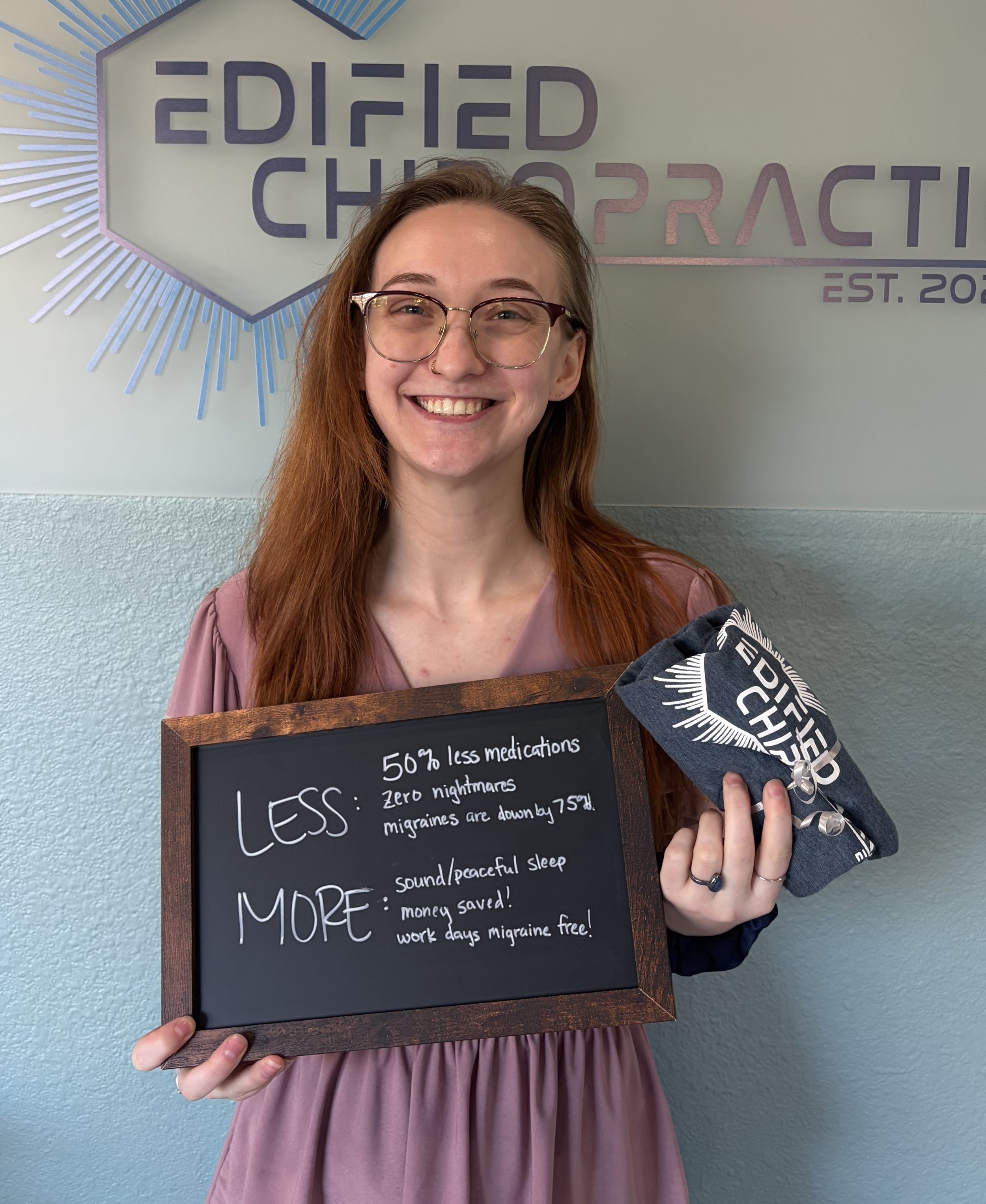
Christiana is 27. She just completed her first year of care at Edified. And when she reflected on all the changes she’d experienced along the way, here's what she wrote:
Less: 50% less medications. Zero nightmares. Migraines down by 75%.
More: Sound, peaceful sleep. Money saved. Work days migraine free.
And then, not even a week later at her next adjustment — the line that said everything:
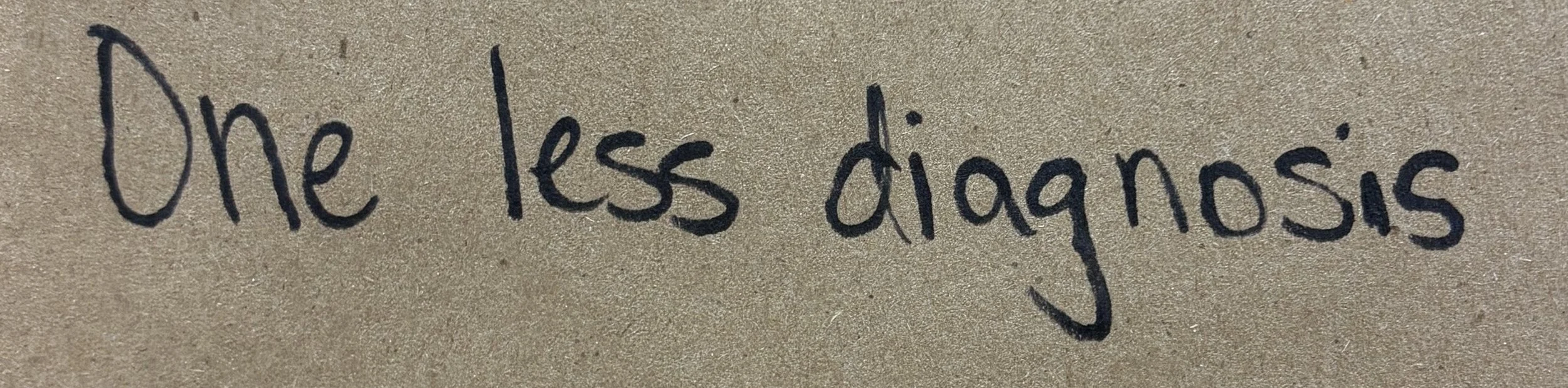
"one less diagnosis."
The nightmares she never even mentioned on her intake form helped her rewrite an accompanying diagnosis she’d carried for a long time. Gone.
What the Nervous System Does While You Sleep
Sleep isn't passive. It's one of the most active and important things your nervous system does.
During deep, restorative sleep, your brain consolidates memory, your body repairs tissue, your immune system resets, and your stress hormones recalibrate. It's the window where real healing happens — and it only works properly when your nervous system feels safe.
When someone is locked in sympathetic overdrive — that chronic fight-or-flight state — the brain doesn't fully disengage at night. It stays vigilant. Sleep becomes lighter, more disrupted, and for some people, the threat-processing centers of the brain stay active enough to generate nightmares.
This isn't a sleep disorder in isolation. It's the nervous system doing exactly what an overloaded nervous system does: it can't stand down.
Christiana didn't know that's what was happening. She just knew sleep felt unsafe — and that she'd accepted it.
What We Found With Her Nervous System Scans
Before we adjust any new patient, we run a neurological assessment using three specialized scans:
• HRV (Heart Rate Variability): measures how well your nervous system adapts to and recovers from stress
• sEMG (Surface Electromyography): detects muscle tension patterns along the spine caused by nerve interference
• Thermal Imaging: identifies temperature asymmetries that reveal how the autonomic nervous system is functioning
These scans don't just confirm what someone is experiencing — they show us why. And they give us a baseline to measure real change against — not just how someone feels, but what their nervous system is objectively doing.
For someone dealing with chronic migraines and disrupted sleep, we were not at all surprised to see a nervous system that's working far too hard just to get through the day — with little left over for repair, regulation, or rest.
How Healing Happened — and What It Looked Like
Christiana started her corrective care and began noticing changes within her first few months. The migraines — which had been frequent and disruptive — started pulling back. She was managing them with less medication. Her sleep began to shift.
And at some point, she realized the nightmares had stopped.
She hadn't been tracking it. It wasn't a goal she'd set. It was just... one day she noticed that something that used to be there wasn't anymore.
This is one of the things we love most about working with the nervous system: the healing is often broader than the goal. People come in for one thing and find that their body was waiting to fix several things at once — it just needed the interference removed.
"People come in for one thing and find that their body was waiting to fix several things at once — it just needed the interference removed."
The Moment in the Waiting Room
Several months ago, Christiana wrote "no more nightmares" on the weekly wins board. What she didn’t know was that less than an hour later, someone else in our practice — in a completely separate conversation — told us they were struggling with nightmares.
We were in awe at the timing of Christiana’s addition to our wins board. She had no idea that her breakthrough would help us walk someone else through that same exact struggle. The ink was barely dry. We get goosebumps just thinking about it.
Why "One Less Diagnosis" Matters More Than It Sounds
We live in a world that's very good at labeling what's wrong with us. Diagnoses serve a purpose — they create language, open doors to treatment, and help people feel seen.
But sometimes a diagnosis becomes an identity. A ceiling. A thing we stop questioning because we've been told it's just how we're wired.
When Christiana wrote "one less diagnosis," she wasn't being flippant. She was marking something real: a condition that had been named, categorized, and carried — and that her nervous system healed from when it finally had the chance.
We're not in the business of making diagnostic claims. But we are in the business of helping nervous systems function the way they were designed to. And sometimes, when that happens, the labels people have carried for years no longer apply.
What Are You Carrying That You've Stopped Questioning?
Christiana's story is an invitation to ask yourself something honest: what have you accepted about your health that you've never actually tested?
The disrupted sleep you've had for years. The thing that happens when you're stressed. The way your body responds to certain situations. The symptoms you manage but don't expect to resolve.
Sometimes those things are rooted in a nervous system that's been stuck — not broken, not permanent, just stuck. And nervous systems can unstick.
Our neurological assessment — HRV, sEMG, and thermal scan — gives us a real picture of what's happening beneath the surface. We serve patients from across the East Valley: Gilbert, Chandler, Mesa, Queen Creek, Tempe, and beyond. If any part of Christiana's story sounds familiar, this might be worth exploring.
Congratulations, Christiana.
You came in for one thing. Your nervous system had bigger plans.
Peaceful sleep. Fewer migraines. Half the medication. Work days reclaimed. And a diagnosis you no longer carry.
You showed up. Your nervous system responded. And without even knowing it, you gave someone else hope. Thank you!
Edified Chiropractic | Gilbert, AZ | Neurologically-Based, Cash-Based Family Chiropractic Care