"What Wizardry Is This?": A Decade of Weekly Migraines, Gone
Ryan had migraines nearly every week since he was 13 years old. Eight months into care at Edified, his mom — who had carried a decade of worry for her son — wrote a review that made our whole office tear up.
A Decade of Migraines
Ryan was 13 years old when his migraines started. For the next ten years, they came nearly every week — sometimes every week to ten days, sometimes multiple times in a single week. Ryan is autistic, and his mom had spent over a decade managing his pain alongside everything else that comes with caring for her son. By the time she found us, worry about his migraines had become a near-constant companion.
Ryan started care with our docs on October 23rd. In the eight months since, he has only had two migraines.
Two. After a decade of migraines arriving nearly every week, sometimes more than once a week. A condition that had been a constant, unwelcome presence in Ryan's life for ten straight years dropped to two episodes in eight months of consistent care.
His mom put it best in her own words, reflecting on just how dramatic the shift has felt after a decade of near-constant migraines:
"I'm amazed that going twice a week has literally stopped them from happening. What wizardry is this?"
There's no wizardry involved. But there is a clear, explainable reason why a result like this happens — and it has everything to do with the nervous system.
Why Migraines Are a Nervous System Problem, Not Just a Head Problem
Migraines get treated, most often, as a standalone problem to be managed — medication when one hits, maybe preventive medication taken daily, a dark room, and waiting it out. That approach treats the symptom. It rarely addresses why the migraines are happening in the first place.
Here's what's actually going on under the surface for a lot of chronic migraine sufferers: the upper cervical spine — the top of the neck, right where it meets the base of the skull — has a direct relationship with the nervous system's ability to regulate blood flow, muscle tension, and nerve signaling to the head and face.
When there is tension, restriction, or misalignment in that region, it can disrupt normal nervous system function in a way that makes the head and neck far more prone to migraine triggers — even seemingly small ones like stress, light, certain foods, or weather changes. The nervous system becomes hypersensitive, primed to overreact.
This is also why migraines so often come paired with neck and back pain, the way Ryan's mom mentioned hoping his back pain would continue to improve. The same areas of physical tension that disrupt nervous system signaling to the head are often the same areas causing pain elsewhere in the spine. They are not separate problems. They are connected through the same nervous system pathways.
When we use specific, gentle chiropractic adjustments to reduce that tension and restore proper nervous system communication, the body's hypersensitivity to migraine triggers tends to come down. For some people, that means fewer migraines. For Ryan, eight months in, it has meant going from a near-weekly occurrence to two episodes total.
More Than Just Migraine Relief: Why Ryan Has More Energy
One detail in his mom's review is easy to skim past, but it matters a lot: Ryan says he feels like he has more energy at times.
This is one of the things we see consistently in patients whose chronic pain — migraines, back pain, tension — starts to resolve. A nervous system that is constantly managing pain and stress is a nervous system that is constantly spending energy. Pain is exhausting, even when you're used to it. It pulls resources away from everything else the body and brain need to function.
When the nervous system isn't fighting chronic pain signals around the clock, that energy becomes available again — for focus, for mood, for simply feeling like yourself. It's not a separate benefit from the migraine relief. It's the same mechanism, showing up in a different way.
Caring for Patients on the Autism Spectrum
Ryan is autistic, and that matters to how we think about his care.
Many autistic individuals experience the world with a nervous system that processes sensory input differently — sometimes more intensely, sometimes less predictably. That can mean a lower threshold for things like light sensitivity, sound sensitivity, and yes, migraines. It can also mean that pain and discomfort are communicated differently than we might expect, which makes consistent, attentive care even more important.
We approach every patient as an individual, and that's especially true for our patients on the spectrum. Gentle, predictable, specific adjustments — tend to work well because we don't ask the nervous system to tolerate anything overwhelming. We meet each patient where they are.
For Ryan's mom, part of what this care has given her son is also something for her: relief from a worry she had carried for over a decade.
"It has taken a load of stress off me also because I always worry about my son and his migraines."
That sentence is why we do this work. Chronic pain doesn't just affect the person experiencing it. It ripples out to everyone who loves them and carries the worry alongside them.
What to Expect If You Bring In a Chronic Migraine Sufferer
We start with a real conversation. How long have the migraines been happening? How often? What seems to trigger them? What else is going on in the body — neck pain, back pain, sleep issues? The full picture matters.
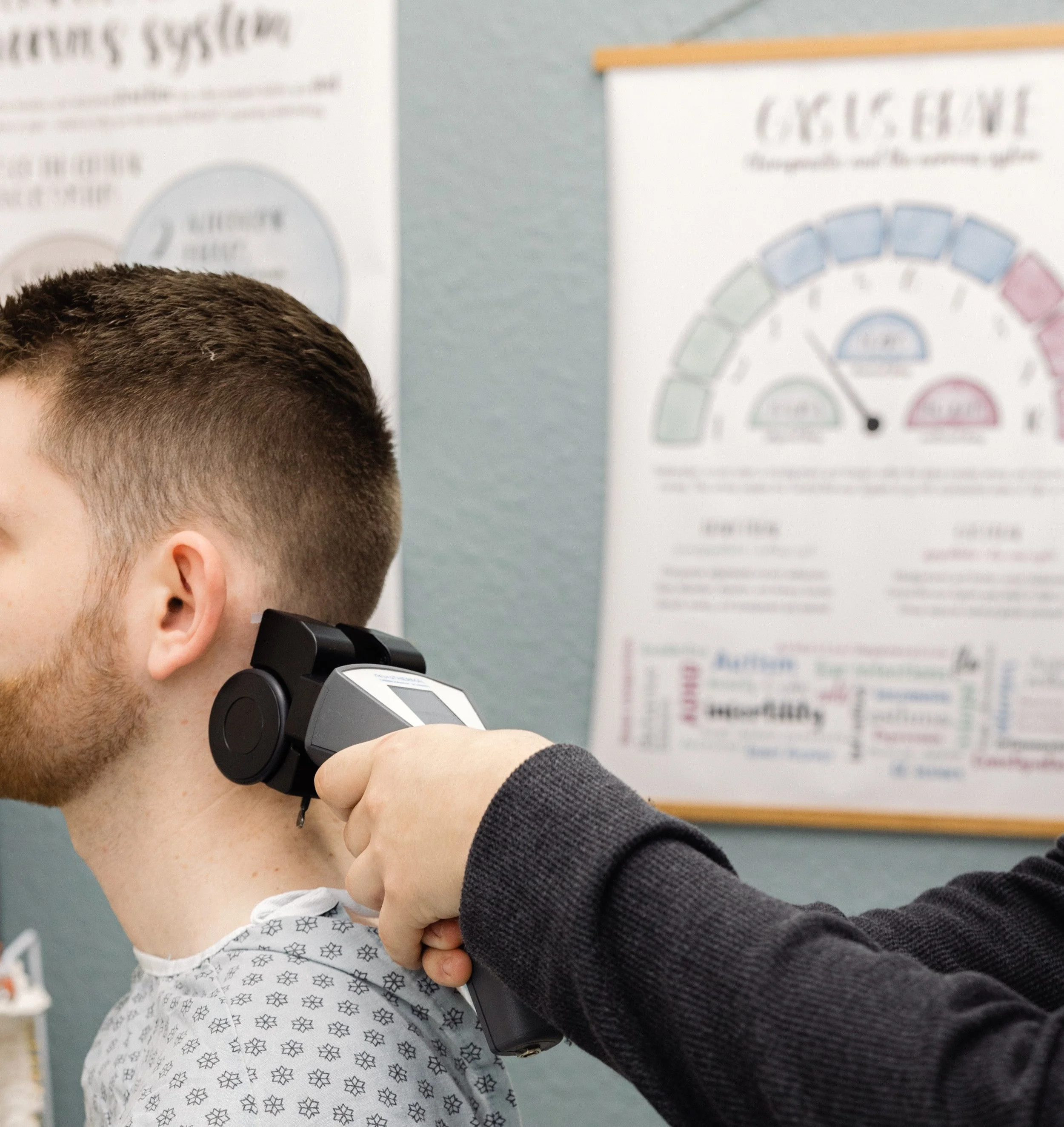
We assess with neurological scans. Our three non-invasive scans — HRV, sEMG, and thermal imaging — give us an objective look at how the nervous system is functioning and where stress and dysfunction are concentrated, especially in the upper cervical region.
We build a plan based on what we find. Frequency of care depends on the severity and duration of the problem. For someone with a decade of weekly migraines, a more frequent initial schedule often makes the biggest difference early on (Ryan started with three-weekly adjustments in the beginning).
We track progress together. We want to know what's changing — migraine frequency, pain levels, energy, sleep. Your feedback shapes the ongoing plan.
If You're Tired of Managing Migraines Instead of Resolving Them
Maybe you've been told migraines are just something you or your child will have to live with. Maybe you've tried medication after medication and gotten partial relief at best. Maybe, like Ryan's mom, you've been carrying this worry for years and you're exhausted by it.
We are not promising a cure for migraines. Every nervous system is different, and every case is different. But we can promise an objective look at what's happening in the nervous system, a clear explanation of what we find, and a plan built around the person in front of us. Migraine relief is possible. Ryan’s story is just one example of the type of healing a nervous system can experience through care.
No wizardry. Just a nervous system finally getting the support it needed.