
Round Ligament Pain During Pregnancy: Relief in Gilbert, AZ

That sharp, catching pain in your lower belly has a name — and it doesn't have to be your normal.
You went to roll over in bed and felt it — a sudden, sharp pulling sensation low in your belly or groin. Or maybe you sneezed, stood up too fast, or took a bigger step than usual, and your whole lower abdomen seized up for a moment. You caught your breath, waited for it to pass, and Googled it at 2am.
If that sounds familiar, you're almost certainly dealing with round ligament pain — one of the most common (and most startling) complaints of the second trimester. It's common, yes. But common doesn't mean it has to be intense, frequent, or something you just push through for the rest of your pregnancy.
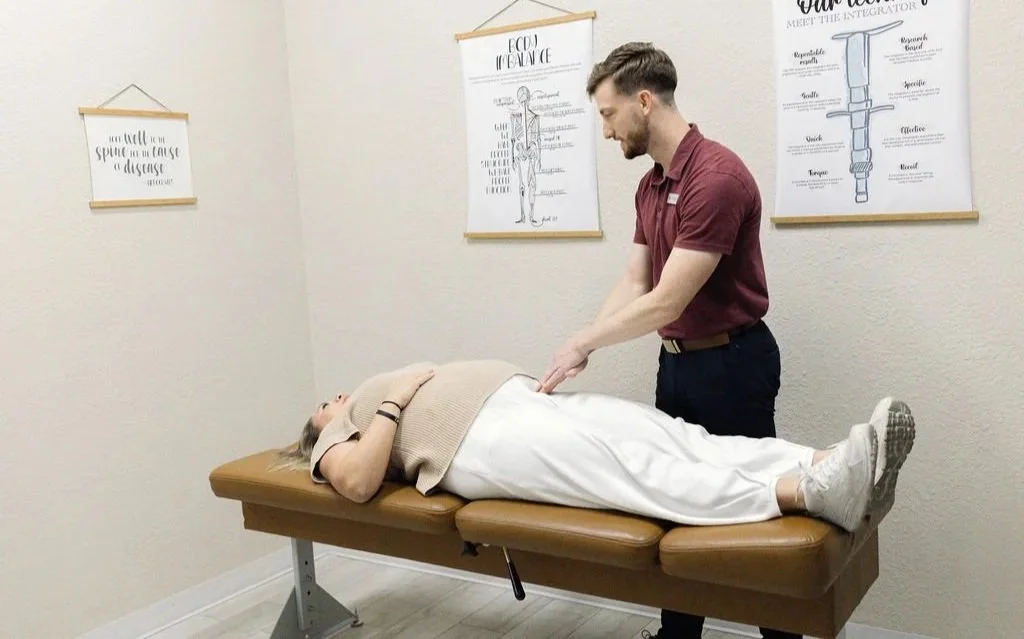
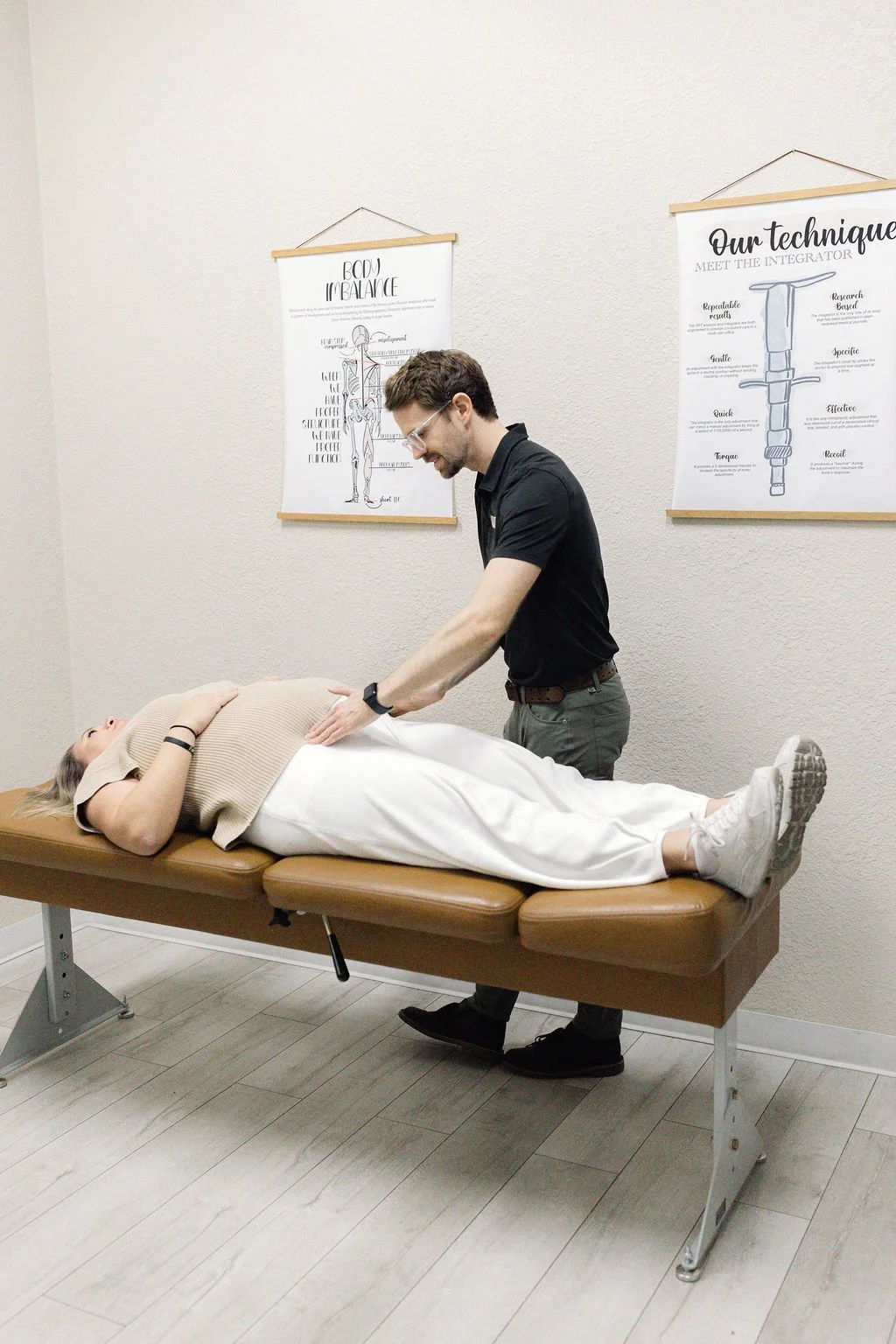
At Edified Chiropractic in Gilbert, AZ, round ligament tension is something we address directly as part of our Webster Technique prenatal care. Gentle, targeted soft tissue release — combined with restoring balance in the pelvis — can make a meaningful difference in how often this pain shows up and how sharp it feels when it does.
What Is Round Ligament Pain — and Why Does It Happen?
The round ligaments are two thick, cord-like ligaments that run from the top of the uterus down through the groin, anchoring into the labia on each side. Their job is to support the uterus and keep it in position as it grows. Under normal circumstances, you'd never notice them. During pregnancy, that changes.
Why Pregnancy Makes the Round Ligaments Angry
As the uterus grows — especially rapidly in the second trimester — the round ligaments are under increasing stretch and tension. At the same time, hormonal changes (particularly the release of relaxin) are causing ligaments throughout the body to soften and loosen, which makes the round ligaments more reactive than usual. They're longer than they want to be, more sensitive than they usually are, and being asked to support a uterus that's changing size almost daily.
When something causes a sudden change in position — rolling over, standing up quickly, sneezing, coughing, laughing, or even a bigger stride while walking — the round ligaments contract sharply in response. That contraction is what produces the pain: a sudden, stabbing or cramping sensation in the lower abdomen, groin, or hip. It typically lasts a few seconds to a few minutes and then fades.
What Makes It Worse
Round ligament pain tends to be most intense and most frequent when:
The pelvis is out of balance, creating uneven tension on the ligaments
One round ligament is under more stress than the other (asymmetrical uterine support)
Movement is sudden or the body isn't warmed up
You've been on your feet for extended periods
Baby has a growth spurt and the uterus expands quickly
What Round Ligament Pain Feels Like
Most mamas describe it as:
A sharp, stabbing, or catching sensation in the lower belly — usually one side more than the other
A pulling or cramping feeling in the groin or inner thigh
Pain that's triggered by movement and fades quickly when you hold still or change position
Occasionally, a deeper aching that lingers for a bit longer
Important Note: Round ligament pain is generally harmless — but sudden, severe abdominal pain, pain accompanied by fever, bleeding, or contractions, or pain that doesn't resolve with rest should always be evaluated by your OB or midwife. When in doubt, call your birth provider.
Here's what most conversations about round ligament pain miss: the ligaments don't exist in isolation. They're anchored to the uterus on one end and to the pelvis on the other — which means the alignment and movement of the pelvis directly affects how much tension those ligaments are under at any given moment.
Why Pelvic Imbalance Makes Round Ligament Pain Worse
The Hammock Analogy
Think of the uterus sitting in a hammock — the round ligaments and broad ligament form the sides of that hammock, holding it level and centered. When the pelvis is balanced, the hammock hangs evenly, and the tension on both sides is relatively symmetrical. When the pelvis is twisted, tilted, or one sacroiliac joint is restricted, one side of the hammock pulls tighter than the other. That uneven tension keeps the round ligament on that side under chronic stress — so even a small movement can set it off.
This is exactly why some mamas have occasional, mild round ligament twinges, while others deal with sharp, frequent pain that stops them in their tracks. The difference often comes down to what's happening in the pelvis.
The Role of the Sacrum
The sacrum — the triangular bone at the base of the spine that forms the back wall of the pelvis — plays a central role in pelvic balance. When the sacrum is misaligned or not moving properly, the entire pelvic bowl shifts, and the structures attached to it — including the round ligaments — compensate. Restoring proper sacral motion is often one of the most effective things we can do to reduce the chronic, background tension that makes round ligament pain so reactive.
How the Webster Technique Addresses Round Ligament Pain
The Webster Technique is the most specific and effective chiropractic tool we have for round ligament pain during pregnancy — because it was designed to address exactly this. The technique has two components that work together:
Sacral and Pelvic Adjustment
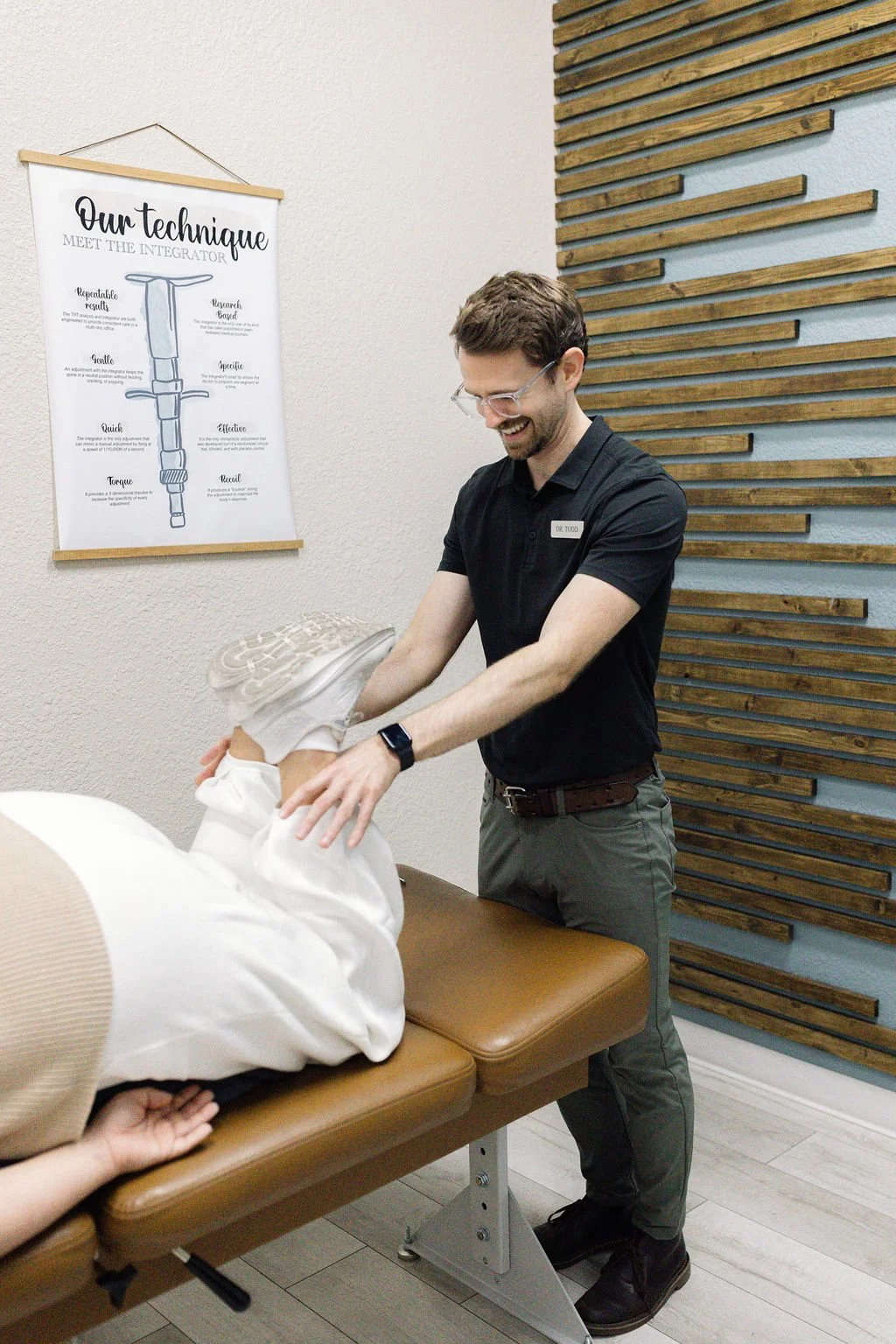
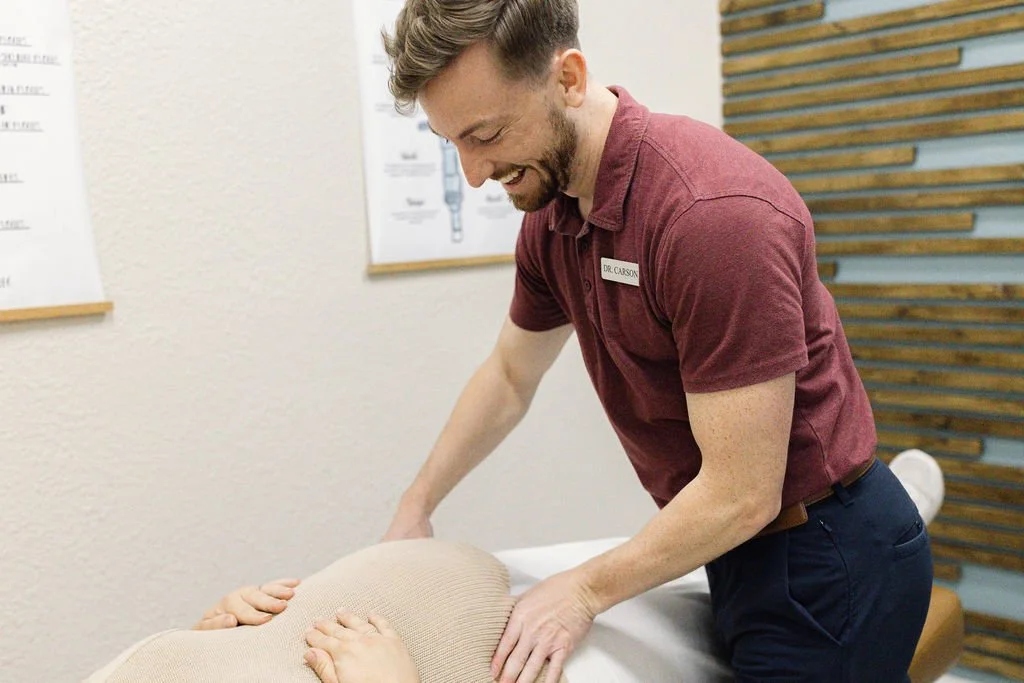
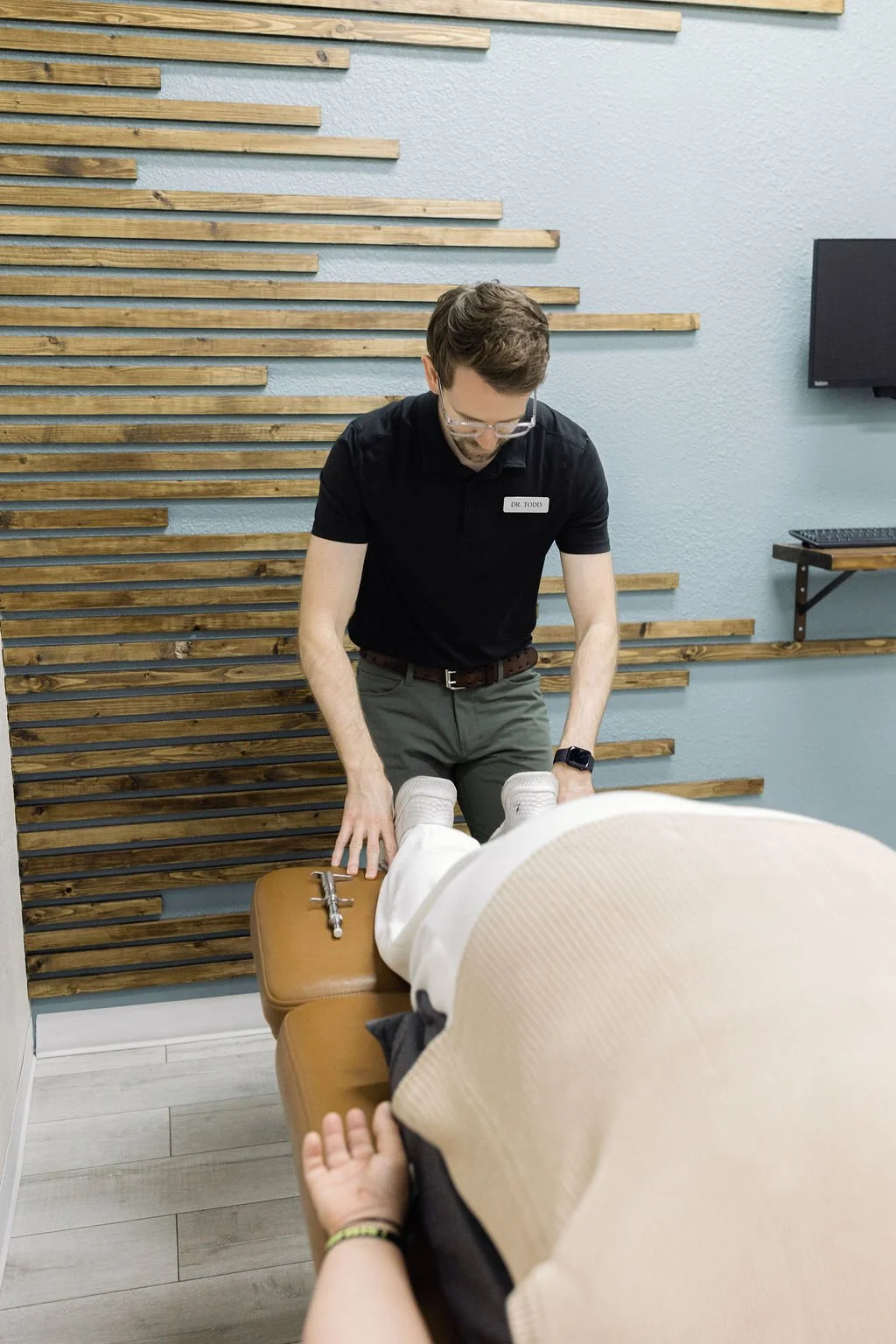
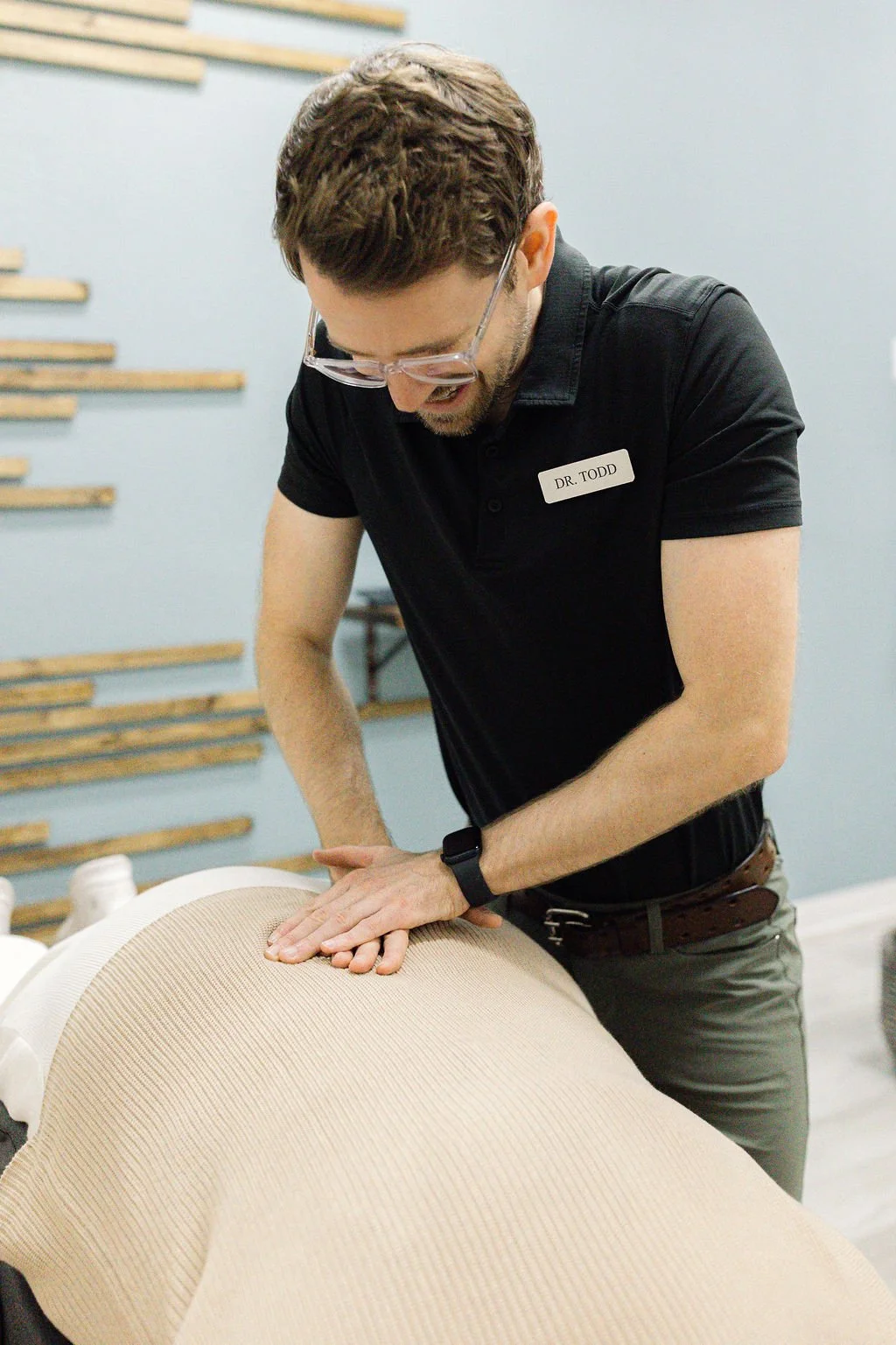
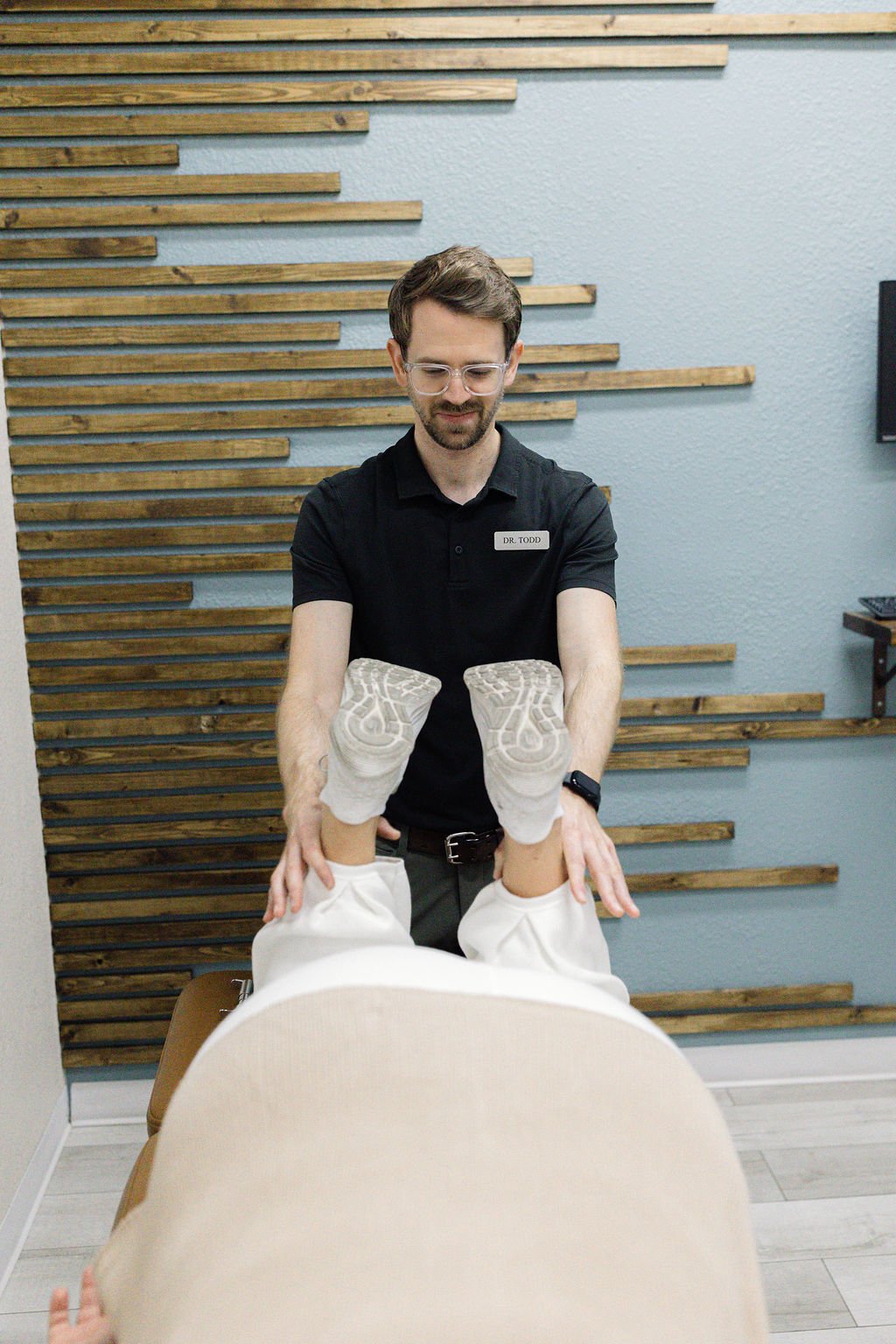
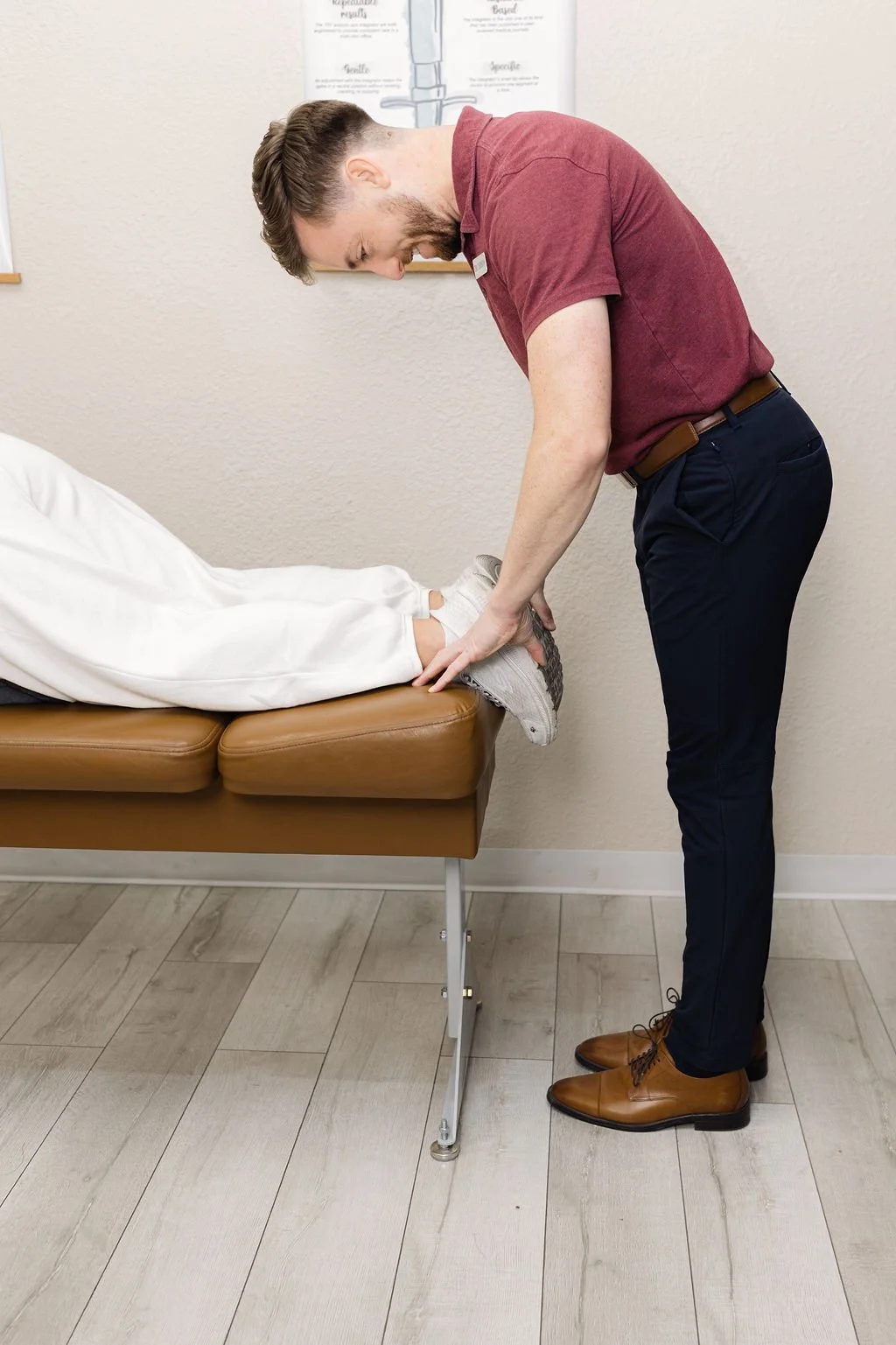
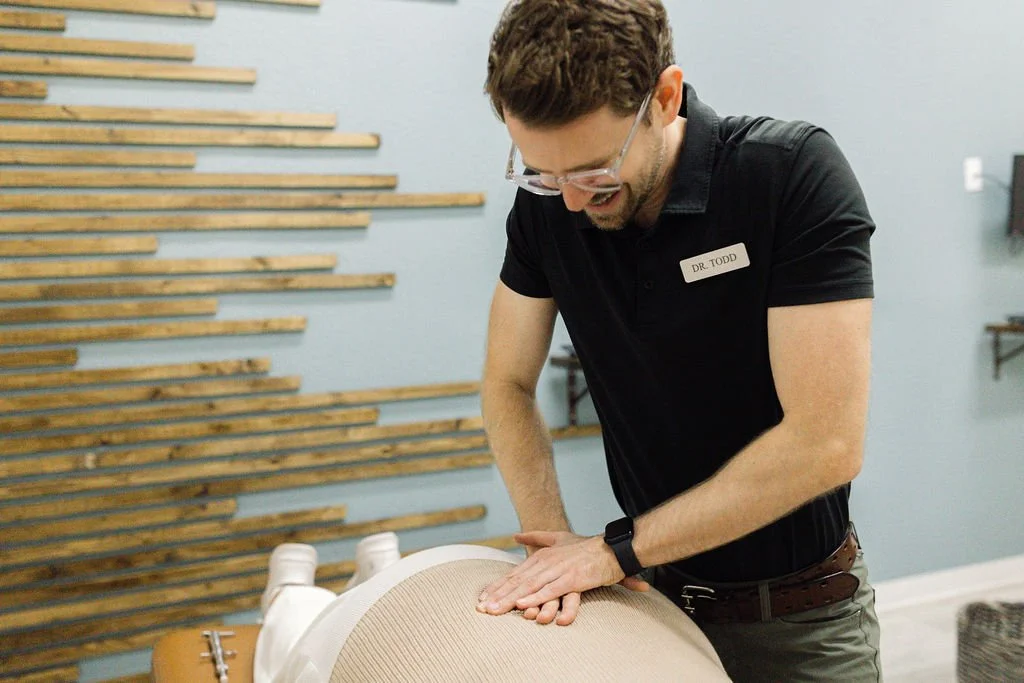
The foundation of every Webster Technique visit is a gentle, low-force adjustment to the sacrum and pelvis. By restoring proper alignment and motion to these structures, we address the upstream cause of the uneven ligament tension — the pelvis being out of balance. When the pelvis is level and the sacrum is moving freely, both round ligaments can bear load more symmetrically, which reduces the chronic tightness that makes them so reactive to movement.
This adjustment involves no twisting, no high-force movements, and no positions that place any pressure on your belly. Most mamas are surprised by how gentle it actually is.
Targeted Round Ligament Soft Tissue Release
The Webster Technique also includes a specific soft tissue component that addresses the round ligaments directly. Using gentle, sustained pressure along the pathway of the ligament — from the lower abdomen into the groin — we work to release the holding patterns and chronic tension that have built up in the tissue. This part of the technique is what sets Webster apart from a standard spinal adjustment, and it's often where mamas feel the most immediate relief.
The release can feel tender in the moment, especially if the ligament has been under significant stress — but that tenderness fades quickly, and most mamas notice a meaningful reduction in pain frequency and intensity within a few visits.
Nervous System Support
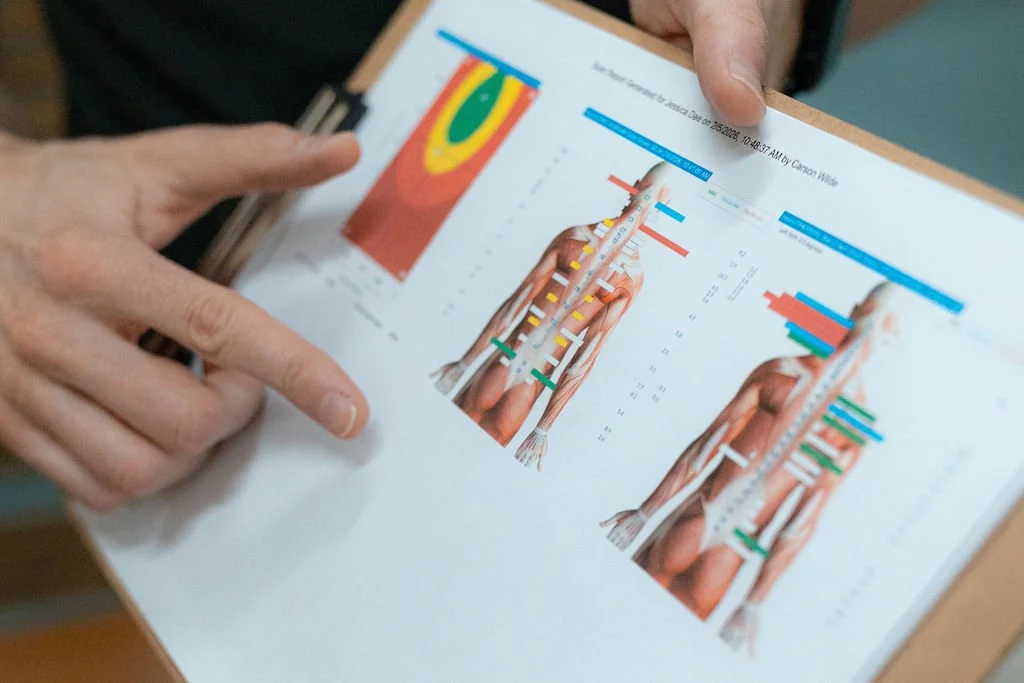
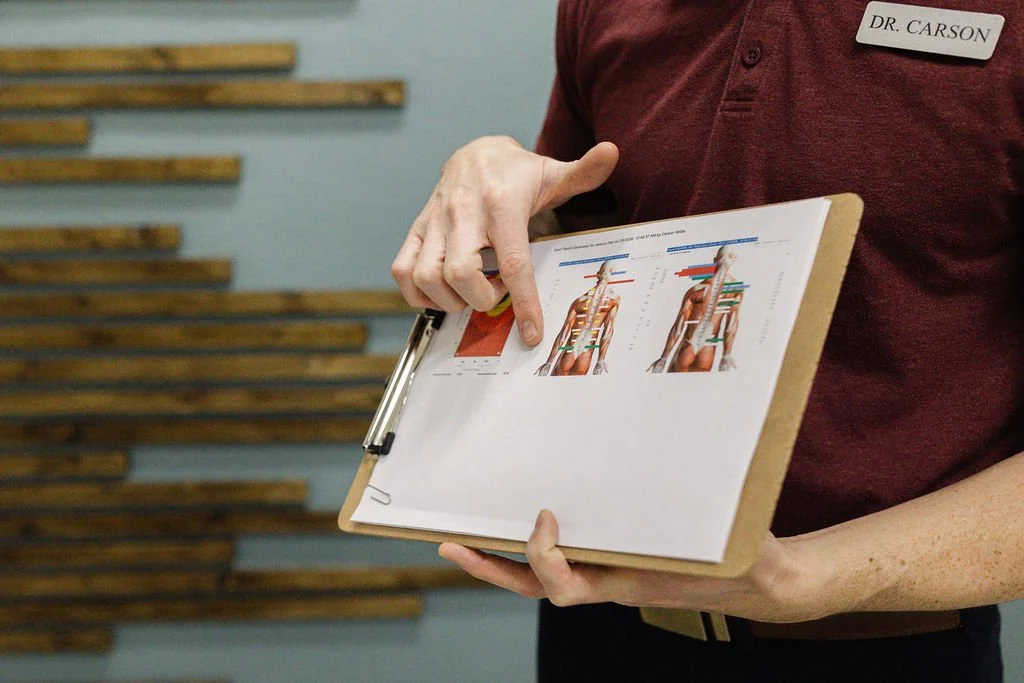
At Edified, we look at round ligament pain through a nervous system lens too — because the body's ability to adapt to change, regulate muscle tension, and reduce pain sensitivity all run through the nervous system. Our CLA INSiGHT neurological scans give us a picture of how the nervous system is functioning alongside the physical assessment, so we're never guessing about what your body needs most.
What Mamas in Gilbert, AZ Are Saying

“I stumbled into Edified Chiropractic’s booth at the Eastmark farmers market, and it was like the Heaven gates opened and the angels sang down. I was pregnant with twins and having a lot of lower back pain and round ligament pain. It just so happens that Doctor Todd and Doctor Carson specialize in the Webster technique for pregnancy. They set me up with an appointment a few days later, I went in had my evaluation and the next day they got me in to start treatment and wow what a difference it has made for me this pregnancy! They created a specialized plan just for me and my needs. I have made so many strides and continue to be successful in my pregnancy and I owe a lot of that to Doctor Todd and Doctor Carson they have made a world of a difference for me during this pregnancy! I can’t wait until my babies can become patients of theirs as well and we can have a healthy successful infancy like my pregnancy has been! You walk into the office and Susie and Callie at the front desk are so kind and welcoming, getting set up in the adjustment rooms is nice and easy! And bonus they have pregnancy pillows so this pregnant mama gets to lay on her belly for a little bit! Doctor Carson and Doctor Todd walk you through everything they’re doing during the adjustment and truly care about your care and how you’re feeling. Definitely recommend Edified Chiropractic 10/10 check them out!”
Randi W, Gilbert, AZ ⭐⭐⭐⭐⭐
What to Expect When You Come In for Round Ligament Pain
Whether you're coming in specifically for round ligament pain or it's one of several pregnancy complaints you're dealing with, the experience at Edified is the same: thorough, warm, and built around what's actually happening in your body — not a generic protocol.
Day 1 — Your Initial Exam
Your first visit includes a full health consultation, all three CLA INSiGHT neurological scans, and a hands-on pelvic and spinal assessment. Drs. Todd and Carson will take time to understand your full pregnancy history, how your round ligament pain is presenting, and what else your body is dealing with. All three scans are completely safe during pregnancy and take just minutes to complete.
Day 2 — Report of Findings
On Day 2, we walk you through your scan results, our assessment findings, and a care plan recommendation specific to where you are in your pregnancy and what your body needs. You'll understand exactly what's contributing to your round ligament pain and what we're going to do about it.
Ongoing Care
Round ligament pain often responds quickly — many mamas notice a real difference after just a few visits. How often you come in depends on how far along you are, how much discomfort you're managing, and what your birth goals are. We'll create a plan that makes sense for your life and your pregnancy, not a one-size-fits-all protocol.
Most pregnant mamas follow a general rhythm of once monthly in the first trimester, twice monthly in the second, and weekly in the third — with adjustments based on what your body is telling us.

You Might Be in the Right Place If...
You're in your second or third trimester and dealing with sharp, stabbing pain in your lower belly or groin — usually triggered by movement — and you're not sure if it's normal or something to worry about.
You've been told it's "just round ligament pain" and to rest, but it's happening constantly and significantly affecting your quality of life.
You've tried a belly band, sleeping with a pillow between your knees, and moving more slowly — and it's still happening.
You want to understand why it keeps happening, not just manage it episode by episode.
You're looking for a pregnancy chiropractor in Gilbert, AZ who specializes in prenatal care and can address the whole picture — pelvis, nervous system, and the soft tissues directly involved.
If you nodded along to any of that, Drs. Todd and Carson would love to meet you.
What Can Help With Round Ligament Pain Between Visits
Chiropractic care addresses the underlying causes — but there are also things you can do day-to-day to reduce flare-ups and manage the discomfort in the meantime.
Move slowly when changing positions. Round ligament pain is almost always triggered by sudden movement. When you're rolling over in bed, getting up from a chair, or shifting positions, slowing down and using your core to brace slightly before moving gives the ligaments time to adjust rather than contract sharply.
Flex your hips when you sneeze or cough. This one sounds strange but works — bending your hips slightly (or drawing your knees toward your chest if you're lying down) before a cough or sneeze takes tension off the round ligaments and dramatically reduces the pain response.
Warm compress. Gentle heat on the lower abdomen can help relax ligament tension and soothe discomfort. Avoid hot baths or heating pads that are too warm during pregnancy — a warm (not hot) compress for 10–15 minutes is the safe version.
Rest. If you've had a particularly active day and the round ligament pain has ramped up, rest is your best tool. Getting off your feet and letting the ligaments decompress is often the fastest way to calm an acute flare.
Note: These strategies help manage symptoms between visits, but they don't address the underlying pelvic imbalance that's making the round ligaments so reactive. That's what chiropractic care is for.
Frequently Asked Questions About Round Ligament Pain and Chiropractic Care
-
Round ligament pain itself is not dangerous — it's a normal (if uncomfortable) part of pregnancy caused by the rapid growth of the uterus and the increased stretch on the ligaments supporting it. That said, it's worth knowing the difference between round ligament pain and other types of abdominal pain during pregnancy. Round ligament pain is typically sharp, brief, triggered by movement, and limited to one or both sides of the lower abdomen or groin. If you experience severe or persistent abdominal pain, pain accompanied by fever, bleeding, contractions, or pain that doesn't resolve, contact your OB or midwife right away. When in doubt, always check with your birth provider.
-
Round ligament pain most commonly begins in the second trimester — typically around 14–18 weeks — when the uterus is growing most rapidly and the round ligaments are under the most acute stretch. It can persist into the third trimester, especially if the pelvis is out of balance and one ligament is carrying more load than the other. Some mamas experience it earlier, and a small number don't experience it at all. Every pregnancy is different.
-
Yes — and this is one of the areas where Webster Technique care has the most direct impact. The Webster Technique includes a specific soft tissue protocol for the round ligaments, combined with a sacral and pelvic adjustment that addresses the underlying imbalance making the ligaments reactive. Many mamas experience meaningful relief within a few visits. The goal isn't just to reduce the acute pain but to address what's making the ligaments so sensitive in the first place — which is almost always a combination of pelvic imbalance and excess tension in the surrounding soft tissues.
-
Absolutely. Webster Technique adjustments are gentle, low-force, and specifically designed for pregnancy. No twisting, no high-velocity movements, and nothing that places any pressure on your belly. You'll be positioned on a table designed for pregnant bodies — with a belly cutout so you can lie face-down comfortably without any compression on your baby. Both Dr. Todd and Dr. Carson are ICPA Webster certified and have extensive experience caring for pregnant mamas at every stage.
-
Not at all — in fact, earlier is often better. Round ligament pain that starts in the second trimester tends to get more manageable (not less) when we address the pelvic imbalance early, before the uterus gets heavier and the tension compounds. Mamas who start Webster Technique care in the first or early second trimester often avoid the more intense episodes that come later. We see mamas from the very beginning of pregnancy through delivery.
-
Yes — and it's very common for round ligament pain to show up alongside other pregnancy complaints. Pelvic imbalance is a common thread that runs through many of the most frequent pregnancy discomforts: lower back pain, hip pain, sciatica, SPD, and round ligament pain are often all connected to the same underlying pattern. A single, comprehensive Webster Technique care plan addresses the root cause — and many mamas find that multiple symptoms improve together, not in isolation.
Serving Pregnant Mamas in Gilbert, AZ and the East Valley
Edified Chiropractic serves expecting mamas throughout Gilbert, Mesa, Chandler, Queen Creek, and San Tan Valley. Our office is located at 1184 N. Gilbert Road, Suite 200 — easy to get to from across the East Valley, close to SanTan Village and the Gilbert Heritage District.
If you're looking for a pregnancy chiropractor in Gilbert, AZ who understands round ligament pain, knows the Webster Technique inside and out, and takes the time to actually listen — we'd love to be part of your birth team.
Ready to Stop Dreading Every Sneeze?
Round ligament pain has a way of making you hold your breath through every quick movement. You deserve to feel comfortable in your body — and we can help.
Schedule your prenatal consultation at Edified Chiropractic and let's get your pelvis balanced and those ligaments some relief.