
Colic Relief in Gilbert, Arizona: oNE bABY’S Journey From Crying to Calm and Happy
When Grace first came into our office at 5 weeks old, she was struggling. Mom and dad had been spending their days and nights trying to soothe her—pacing the floors, bouncing up and down—anything that would provide relief, but nothing seemed to work. They were at their wits end “throwing anything at the wall just to see what would stick.” Mom was running out of ideas.
Grace wasn’t just fussy—she was also constipated (only having 1-2 bowel movements a week) and hated lying down especially after eating (which made us suspect some reflux).
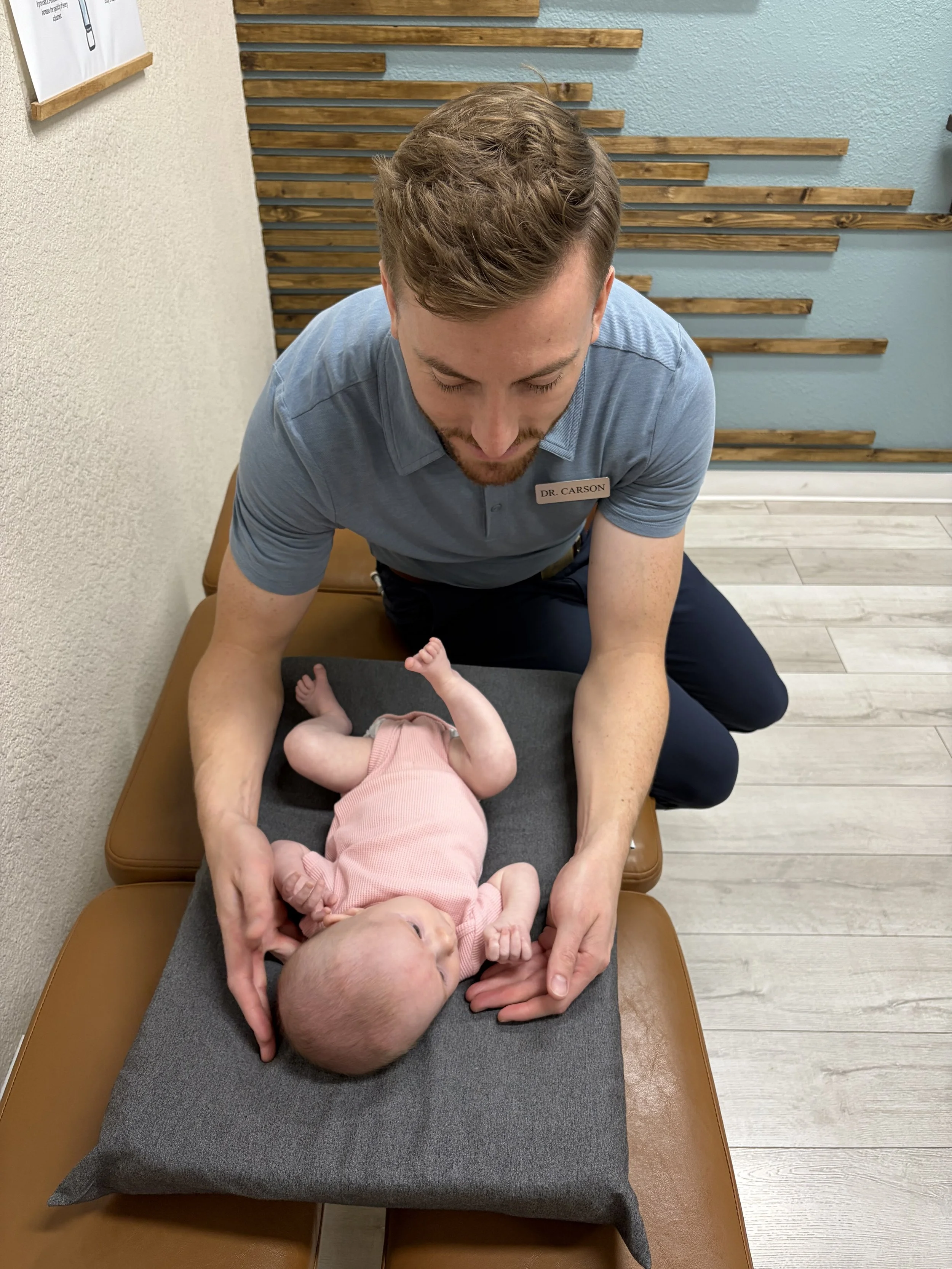
The Early Days: A Tense, Overwhelmed Nervous System
From the very first visit, it was clear that Grace’s little body was stuck in stress. The gas pedal of her nervous system had been activated, and her little body was working in overdrive. She came into the office screaming, got adjusted, and screamed again all the way to the car.
What we often see in babies like Grace is a nervous system that is stuck in “fight-or-flight” mode—also known as sympathetic dominance. When a baby’s system is overwhelmed like this, it can show up as:
excessive crying
difficulty settling or sleeping
trouble digesting
difficulty pooping
gas or discomfort
Rigid body tension
Grace checked nearly every box.
But her parents were committed, hopeful, and willing to give her body the support it needed to unwind and reconnect.
Understanding the Nervous System + Colic
While colic has many contributing factors, one piece that is often overlooked is the role of the nervous system, especially in newborns.
1. The Fight-or-Flight Response and Digestive Stress
A baby’s nervous system has two main gears:
Sympathetic (fight-or-flight) – the stress, tense, high-alert mode
Parasympathetic (rest-and-digest) – the calm, growth, digestion, and healing mode
Colicky babies are often stuck in that high-alert, fiery sympathetic mode. When the body is in fight-or-flight, digestion slows, the intestines tighten, and the natural rhythm of the gut becomes disrupted.
For Grace, this meant going only one to two times a week and it was a struggle every time.
2. The Vagus Nerve: The Baby Calming Nerve
Another major player is the vagus nerve, the longest calming nerve in the body. It helps regulate:
digestion
bowel movements
heart rate
sleep
soothing and settling
If the vagus nerve is underactive, stressed, or not firing well—often due to birth tension or early life stress—babies may experience colic-like symptoms.
Gentle, specific adjustments aim to support better communication along this nerve and throughout the parasympathetic system.
And for Grace, that’s where things began to shift.
The First Wins: Sleep + Poop Changes We’ll Never Forget
Within the first couple of weeks of receiving gentle adjustments, Grace’s mom shared something that felt like a miracle:
“She slept eight hours last night.”
For a baby who barely settled, this was a massive sign that her nervous system was finally getting the chance to downshift into rest-and-digest mode.
But there was something else her mom noticed…
Grace’s poop schedule started lining up with her adjustments.
The straining stopped.
Her belly felt softer.
Her whole body looked less tense.
Her nervous system was finally able to do what it was designed to do.
Fast Forward a Few Months… and Grace is a Changed Baby
Mom said it best:
“She is a completely different baby.”
We went from:
screaming on the way into the office
screaming during her adjustment
and screaming on the way out
to a baby who is now:
smiling
cooing
pooping regularly and easily
sleeping longer stretches (current record is 12 hours straight!)
engaging with the world with curiosity instead of distress
Grace’s whole personality blossomed the moment her body wasn’t working overtime just to get through the day.
Her mom often comments on how peaceful their home feels now—how much they enjoy her, how much easier feeding, car rides, and bedtime routines have become.
It’s not just that the symptoms changed… their entire family dynamic shifted.
Why Stories Like Grace’s Matter
We share stories like Grace’s because so many parents walk through similar struggles feeling:
overwhelmed
dismissed
unsure where to turn
pressured to accept “this is just colic”
But your mom gut (and dad gut!) matters.
It’s often the first place that senses miscommunication or imbalance in a little one’s body.
Grace’s story is a reminder that when the nervous system is supported—especially in those early weeks of development—everything from sleep to digestion to mood can transform.
We’re honored to walk alongside families experiencing these challenges, and we’re endlessly grateful that Grace’s family trusted us with their sweet girl.